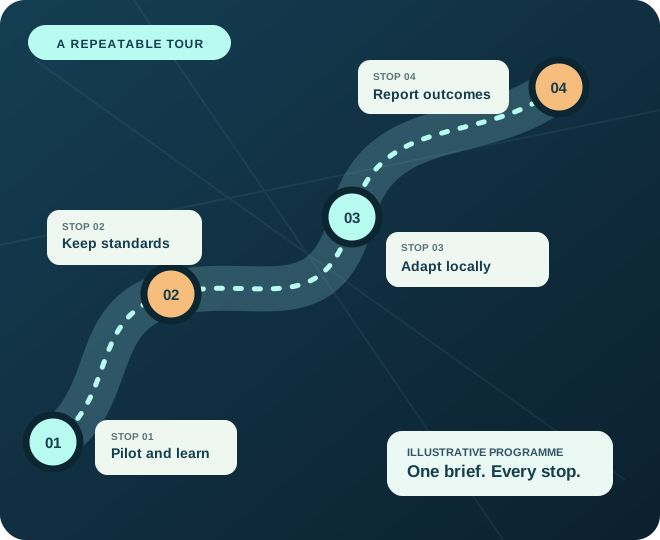
A roadshow can generate a large quantity of activity without generating useful commercial evidence. The scorecard should reflect the decision the campaign is intended to influence.
What this service is designed to solve
Consumer programmes may focus on completed trials or offer redemptions. B2B programmes may track qualified meetings and progression. Recruiting programmes measure eligible conversations and applications.
The work to scope before a quotation
Common data dictionary across stops; definitions and deduplication rules; consent and retention controls; daily summary; comparative location reporting.
To build a dependable proposal, start with the intended audience, the target date or date range, the campaign format, the number of locations and a realistic budget bracket. Where the client already controls a venue, store, supplier or piece of equipment, that can materially change the plan. Where nothing is booked yet, the first phase should validate those assumptions rather than describe them as secured.
The operational reality
Avoid equating impressions, registrations, attendance, meetings or revenue. Direct sales attribution needs agreed brand-side data.
The commercial proposal should make clear who approves the concept, who signs off the site and which activities are delivered by specialist partners. We separate fixed production elements from location-dependent variable costs; that keeps the client in control if the scope changes before launch.
A sensible measurement plan
The most valuable report explains which cities, formats and messages justify repeating.
Before launch, agree precisely what counts as an engagement, a qualified enquiry, a product trial or a conversion. Keep opt-in customer data and anonymised activity counts distinct. The final report should identify both observed outcomes and evidence gaps. This is more useful for a repeat programme than a single unqualified headline number.
What to include in the initial enquiry
- Locations and permissions: what is confirmed, preferred or still awaiting approval.
- Audience and objective: who needs to act and what action matters.
- Physical footprint: available floor area, power, storage and access conditions.
- People and production: likely staff roles, creative assets, product stock and specialist requirements.
- Dates and budget: firm deadlines, flexibility, buying authority and intended spending range.
- Success measure: how an outcome will be captured and who owns customer follow-up.
Frequently asked question
Can you connect roadshow activity to CRM data?
Potentially, with authorised technical access, clear consent and an agreed integration scope.
Start with a real brief
Share the campaign objective and the operating constraints. We will distinguish what is possible from what still needs supplier or site verification before preparing a detailed proposal. Discuss a campaign.
Use one data dictionary for the whole route
A tour becomes difficult to evaluate when each city counts different activities. Set field definitions before activating the first stop.
- Exposure: passing footfall is not the same as actual conversations or demonstrators.
- Engagement: define what counts as a completed interaction or meaningful demonstration.
- Qualified action: use explicit qualification criteria and authorised handoff to sales or recruitment teams.
- Learning: compare site format, staffing and audience differences without claiming causality the data cannot show.
The buyer decision: A single headline total without stop-level breakdown hides whether the campaign format works consistently.